Early 1800s
Little Liberia by the harbor
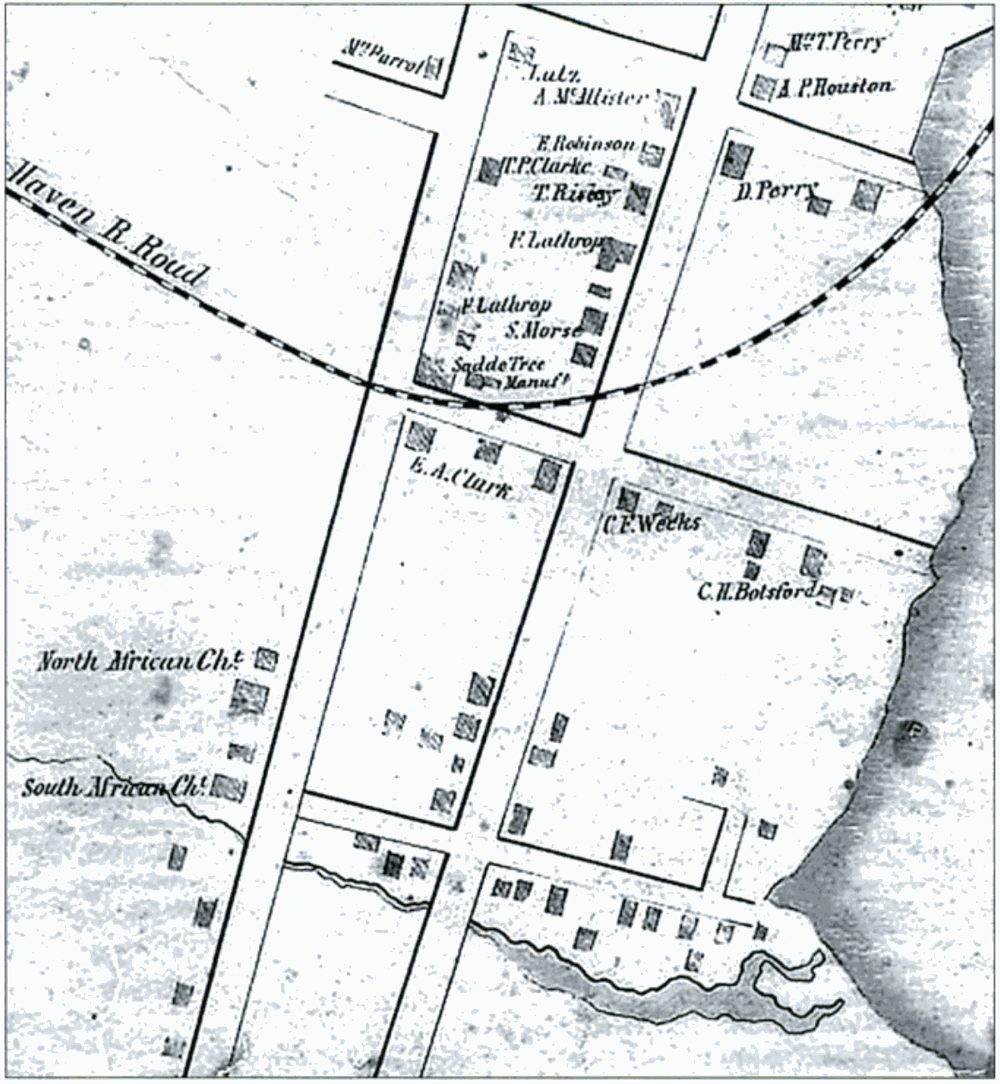
Free Black residents, freedom seekers from the South, and Native American families built a self-governing village by Bridgeport Harbor. Historians count it as a stop on the Underground Railroad.
Our History
Named for A.M.E. Zion Bishop Alexander Walters, our church grew out of Little Liberia, one of Bridgeport's earliest free Black communities.
Early 1800s
Free Black residents, freedom seekers from the South, and Native American families built a self-governing village by Bridgeport Harbor. Historians count it as a stop on the Underground Railroad.
1835
The community organized its first church in 1835. A brownstone cornerstone dated 1835 still marks that beginning.
1882
In 1882 the congregation made its home at the corner of Broad and Gregory Streets in the South End.
Connecticut Freedom Trail
Walters Memorial is a site on the Connecticut Freedom Trail, one of the last surviving landmarks of Little Liberia.
Today
Under Rev. Elvin Clayton, our congregation worships, studies, and serves Bridgeport's South End, sharing the story of Little Liberia with new generations.
Sources: Connecticut Freedom Trail · Bridgeport History Center · Mary & Eliza Freeman Center
Little Liberia
Little Liberia was a free community of Black and Native American residents along Bridgeport Harbor, first known as Ethiope. Two of its landmarks still stand in the South End: our church and the Mary & Eliza Freeman Houses. Both are sites on the Connecticut Freedom Trail.
One of the last surviving landmarks of Little Liberia and a site on the Connecticut Freedom Trail.
Source: Connecticut Freedom Trail
352–354 & 358–360 Main Street
Built in the late 1840s, these are the last two homes of Little Liberia still standing. They are listed on the National Register of Historic Places.
Source: National Park Service
More history: Mary & Eliza Freeman Center. Street map © OpenStreetMap contributors.
Secure giving
Step 1 of 2 · Choose your gift